


Array

Latter-day Saint Temples: Difference between revisions

No edit summary
No edit summary
Line 17: Line 17:
{{:Mormonism and temples/Symbolism}}
{{:Mormonism and temples/Criticisms}}
{{:Mormonism and temples/Spiritual manifestations at the dedication of the Kirtland temple}}
<!-- This page still exists for those who need it, but I'm hiding it from the main temple page for now - RN
{{SummaryItem
{{SummaryItem

Revision as of 03:12, 12 February 2018


Mormonism and temples


Jump to Subtopic:

< Back to FAIR Answers Index

Baptism for the Dead

Summary: The Latter-day Saint practice of baptism for the dead has been criticized on various fronts. First, critics allege that the practice is not biblical and that Latter-day Saints misinterpret the Bible to support it. Next, critics allege that the practice is a form of "ancestor worship." Some have taken issue with Latter-day Saints performing vicarious baptisms for those of the Jewish faith who died during the Holocaust.

The Bible fully supports the practice. Baptism for the dead is not a form of ancestor worship, but a sacred ordinance that allows them the opportunity to enter the presence of God and worship Him. The Church of Jesus Christ of Latter-day Saints have made agreements to not use the names of Holocaust victims, and especially if those individuals are not relatives of current Church members, in temple ordinances.


Question: What is baptism for the dead?

Proxy baptism is a way to provide redemption for those who died without hearing the Gospel

Explained Elder G. Todd Christopherson:

Christian theologians have long wrestled with the question, What is the destiny of the countless billions who have lived and died with no knowledge of Jesus? [1] There are several theories concerning the “unevangelized” dead, ranging from an inexplicable denial of salvation, to dreams or other divine intervention at the moment of death, to salvation for all, even without faith in Christ. A few believe that souls hear of Jesus after death. None explain how to satisfy Jesus’ requirement that a man must be born of water and spirit to enter the kingdom of God (see John 3:3-5). Lacking the knowledge once had in the early Church, these earnest seekers have been “forced to choose between a weak law that [allows] the unbaptized to enter heaven, and a cruel God who [damns] the innocent.” [2]
With the Restoration of the gospel of Jesus Christ has come the understanding of how the unbaptized dead are redeemed and how God can be “a perfect, just God, and a merciful God also.” [3]
While yet in life, Jesus prophesied that He would also preach to the dead [see John 5:25]. Peter tells us this happened in the interval between the Savior’s Crucifixion and Resurrection [see 1 Peter 3:18-19]...

Question: Are the dead being "baptized into the Mormon faith?"

The ordinance is provided, but is only contingent upon the dead accepting it

Some have misunderstood and suppose that deceased souls “are being baptised into the Mormon faith without their knowledge” [4] or that “people who once belonged to other faiths can have the Mormon faith retroactively imposed on them.” [5] They assume that we somehow have power to force a soul in matters of faith. Of course, we do not. God gave man his agency from the beginning. (See fn11) “The dead who repent will be redeemed, through obedience to the ordinances of the house of God,” [6] but only if they accept those ordinances. The Church does not list them on its rolls or count them in its membership.
Our anxiety to redeem the dead, and the time and resources we put behind that commitment, are, above all, an expression of our witness concerning Jesus Christ. It constitutes as powerful a statement as we can make concerning His divine character and mission. It testifies, first, of Christ’s Resurrection; second, of the infinite reach of His Atonement; third, that He is the sole source of salvation; fourth, that He has established the conditions for salvation; and, fifth, that He will come again. [7]

Question: Is temple work a form of "ancestor worship"?

Baptism for the dead does not in any way represent "ancestor worship"

Critics Jerald and Sandra Tanner claim that Church members' "obsession with the dead approaches very close to ancestral worship." In support of this, they quote Elder Adney Y. Komatsu, Assistant to the Council of the Twelve, Ensign May 1976, p.102. The critics wish to show that baptism for the dead is a form of "ancestor worship." In order to accomplish this, they extract phrases from a story told by Elder Komatsu about a couple that wished to be married, but were denied permission by the boy's parents. The use of genealogical research was the key that opened the door to allowing the couple to eventually be married. The authors carefully extract the phrases that they want to use, thereby making it impossible to see what Elder Komatsu was actually talking about. Baptism for the dead does not in any way represent "ancestor worship," and the authors had to search pretty hard to find a quote that they could butcher sufficiently to support this conclusion.

Reference Original quote... Mined quote... Use of sources
The Changing World of Mormonism p. 517. "This obsession with the dead approaches very close to ancestral worship." May I share with you this afternoon an experience that happened to a young couple who were members of the Church in Japan. They wished to be married, and as is the custom in Japan, they sought permission from their nonmember parents for the marriage to be performed. The boy’s parents refused to give permission. With concern and disappointment, the young couple prayerfully sought ways to fill their lives with meaningful Church activities and trusted that permission would be forthcoming later.

At this time Church members were planning a trip to the Hawaii Temple, and much emphasis was made and was being placed on the importance of genealogical research. So the couple joined with others in seeking out their ancestors and in planning to have the temple work done for them. The girl searched diligently through shrines, cemeteries, and government record offices, and was able to gather seventy-seven names. The boy’s uncle, who was a respected and influential member of the family, heard of this and was deeply impressed with and interested in her work. He noted the intense devotion of the girl to honoring her ancestors and suggested that such a young lady would be a good wife for his nephew. Permission was granted for the young people to be married, and the marriage was performed. Later they were sealed in the Hawaii Temple.

It is a Japanese tradition that families gather together for special holidays in January and August. As this young couple joined their family members on these special occasions, they displayed their book of remembrance, and much interest was generated in their work and in the reasons for it. They discussed with those relatives assembled their ancestral lines and the importance of completing the genealogical research. It was difficult for their nonmember families to understand the reasons for a Christian church teaching principles such as “ancestral worship,” for this was a Buddhist teaching and tradition.

Today many young men and women are completing their family group sheets and are teaching the gospel of Jesus Christ to their parents and their relatives by this method. Through genealogical research and through doing temple work for their progenitors, and especially with a temple now becoming available in Tokyo, members can so live that the gospel will yet be embraced by many more in the Orient. This great work has just begun.

—Elder Adney Y. Komatsu, May 1976

May I share with you this afternoon an experience that happened to a young couple who were members of the Church in Japan.... the couple joined with others in seeking out their ancestors and in planning to have the temple work done for them. The girl searched diligently through shrines, cemeteries, and government record offices, and was able to gather seventy-seven names.... As this young couple joined their family members ... they displayed their book of remembrance.... They discussed with those relatives assembled their ancestral lines and the importance of completing the genealogical research. It was difficult for their nonmember families to understand the reasons for a Christian church teaching principles such as "ancestral worship," for this was a Buddhist teaching and tradition.... Through genealogical research and through doing temple work for their progenitors, and especially with a temple now becoming available in Tokyo, members can so live that the gospel will yet be embraced by many more in the Orient Elder Adney Y. Komatsu, Assistant to the Council of the Twelve, Ensign May 1976, p.102

Charles Penrose (1912): "Baptism for the dead—How do we know which of our deceased relatives are to be baptized for"?

Charles W. Penrose, "Peculiar Questions Briefly Answered," Improvement Era Vol. 15, Num. 11 (September 1912):

Question 12: Baptism for the dead—How do we know which of our deceased relatives are to be baptized for, and how do we know when we are to be baptized for them?
Answer: If instead of "we" the questioner had used the word "you," we would answer: Often by personal revelation, always by the law of kindred and genealogy, and the direction of those divinely appointed to administer the ordinances commanded.[8]

Question: Does the practice of baptism for the dead have ancient roots?

There is considerable evidence that some early Christians and some Jewish groups performed proxy ordinance work for the salvation of the dead

The most obvious of these is 1 Corinthians 15:29:

Else what shall they do which are baptized for the dead, if the dead rise not at all? why are they then baptized for the dead?

There have been attempts to shrug this off as a reference by Paul to a practice he does not condone but only uses to support the doctrine of the resurrection. These claims are indefensible. Paul's statement makes no sense unless the practice was valid and the saints in Corinth knew it. This is easily demonstrated if we just imagine a young Protestant, who doubts the resurrection, who goes to his pastor with his problem. The pastor answers him, saying, "But what about the Mormons who baptize for the dead? If the dead rise not at all, why are they then baptized for the dead?" You know what the young doubter would say. He would say, "Pastor, they're Mormons! What's your point?"

In fact, we know that baptism for the dead was practiced for a long time in the early church. As John A. Tvedtnes has noted:

... historical records are clear on the matter. Baptism for the dead was performed by the dominant church until forbidden by the sixth canon of the Council of Carthage in A.D. 397. Some of the smaller sects, however, continued the practice. Of the [Cerinthians]> of the fourth century, Epiphanius wrote:
“In this country—I mean Asia—and even in Galatia, their school flourished eminently and a traditional fact concerning them has reached us, that when any of them had died without baptism, they used to baptize others in their name, lest in the resurrection they should suffer punishment as unbaptized.” (Heresies, 8:7.) [9]

Thus, baptism for the dead was banned about four hundred years after Christ by the church councils. Latter-day Saints would see this as an excellent example of the apostasy—church councils altering doctrine and practice that was accepted at an earlier date.

Tvedtnes continues:

In early Judaism, too, there is an example of ordinances being performed in behalf of the dead. Following the battle of Marisa in 163 B.C., it was discovered that each of the Jewish soldiers killed in the fight had been guilty of concealing pagan idols beneath his clothing. In order to atone for their wrong, Judas Maccabaeus, the Jewish high priest and commander, collected money from the survivors to purchase sacrificial animals for their dead comrades:
“And when he had made a gathering throughout the company to the sum of two thousand drachmas of silver, he sent it to Jerusalem to offer a sin offering, doing therein very well and honestly, in that he was mindful of the resurrection: for if he had not hoped that they that were slain should have risen again, it had been superfluous and vain to pray for the dead. And also in that he perceived that there was great favour laid up for those that died godly, it was an holy and good thought. Whereupon he made a reconciliation for the dead, that they might be delivered from sin.” (2 Maccabees 12:43–46.) [10]

Collection of Other Sources that Can Support the Latter-day Saint Position

Other sources can give credence to the Latter-day Saint position on this matter. Below we list a selective compilation of quotes from scholars that can demonstrate that:

  1. Vicarious baptism was practiced by the ancients
  2. The practice wasn't condemned by Paul (even though that would be a natural thing to do given the corrective purposes of the first letter to the church at Corinth).
  3. The best translation of the original Greek refers to a practice of vicarious baptism.

The passage in the Bible is, at the very least, very short and cryptic. We can't know much about the practice accept the preceeding three assertions. Thus the following scholars would not affirm that the practice of vicarious baptism matches the modern Latter-day Saint conception of it i.e. that it was done on such a massive scale, for salvific purposes, etc. Some argue on linguistic grounds that this only had to do with catechumens (prospective converts to Christianity who died without baptism) but that is not fully substantiated by the text nor the historical context of the passage. Furthermore, as is noted by several scholars (a couple of which are included below), it is complicated by the fact that Paul spoke approvingly of believing Christians becoming vicarious, sanctifying vessels for non-believing spouses.[11] This could naturally be extrapolated to all kindred, non-believing dead.

There is much that we can't know from the text of the Bible itself following an exegetical approach. At some point, additional revelation is necessary to illuminate and expand on previous revelation. That would be the Latter-day Saint position. As Joseph Smith has said concerning the Restoration, it occured so that "a whole and complete and perfect union, and welding together of dispensations, and keys, and powers, and glories should take place, and be revealed from the days of Adam even to the present time. And not only this, but those things which never have been revealed from the foundation of the world, but have been kept hid from the wise and prudent, shall be revealed unto babes and sucklings in this, the dispensation of the fulness of times."[12] Latter-day Saints need not feel compelled to defend every last element of their theology from antiquity. Some elements may appear in seed and then be expanded on later by those "things which never have been revealed from the foundation of the world[.]" What 1 Corinthians 15:29 can tell us without a doubt is that the practice is ancient and that it wasn't rejected by Paul or others of the earliest Christians. The Greek of the passage is unequivocally said to support the notion that vicarious baptism was performed. Other revelation outside of the Bible can expand on it in the Restoration.[13]

Following is our selective listing of sources.[14] All bolded text has been added by the editor of this article:

  • Søren Agersnap: "It cannot be denied that Paul is here [1 Cor 15:29] speaking of a vicarious baptism: one is baptised for the dead to ensure for them a share in the effect of baptism, and this must relate to a post-mortal life. It is also clear that Paul himself refers to this baptismal practice, and without distancing himself from it (This is the embarrassing perception which is the reason for some (comparatively few) interpreters making an imaginative attempt to ignore that this relates to a vicarious baptism)."[15].
  • Charles Kingsley Barrett: "The primary reference is to Christian baptism: certain people (οί βαπτιζόμενοι suggest a particular group, not all Christians) undergo the rite of Christian baptism—in what appear to be very strange circumstances. They are baptized on behalf of the dead. The second part of the verse follows clearly enough. If the dead are dead and are beyond recall, there is no point in taking this or any other action on their behalf. But what was the practice of baptism for the dead, and did Paul approve of it? An account of the history of the interpretation of this passage is given by M. Rissi, 'Die Taufe für die Toten (1962)'...It is very unlikely that with the adjective dead (νεκρός) a noun such as works (cf. Heb. vi. I) should be supplied. Throughout this chapter (and in Paul usually) ‘the dead’ are dead men. It is equally unlikely that on behalf of (ὺπέρ) is to be taken in a local sense, and that the reference is to baptism carried out over the dead, that is, over their graves. The most common view is that Paul is referring to some kind of vicarious baptism, in which a Christian received baptism on behalf of someone, perhaps a friend or relative, who had died without being baptized. There is evidence for some such rite among various heretics (among other quotations Lietzmann cites Chrysostom, on this passage: ‘When a catechumen among them [the Marcionites] dies, they hide a living man under the dead man’s bed, approach the dead man, speak with him, and ask if he wished to receive baptism; then when he makes no answer the man who is hidden underneath says instead of him that he wishes to be baptized, and so they baptize him instead of the departed), and there were precedents in Greek religious practices, though not close precedents (see Schweitzer, 'Mysticism', pp. 283 f.). Stauffer lays great stress on 2 Acc. xii. 40-5. Apart however from 1 Corinthians there is no evidence that a rite of this kind arose as early as the 50’s of the first century. This does not make it impossible; many strange things happened in Corinth. But would Paul have approved of it? It is true that in this verse he neither approves nor disapproves, and it may be held that he is simply using an argumenatum ad hominem: if the Corinthians have this practice they destroy their own case against the resurrection. This is the view held by some, and it is possible; but it is more likely that Paul would not have mentioned a practice he thought to be in error without condemning it. Of those who accept this position some draw the conclusion that vicarious baptism cannot be in Paul’s mind, others that, if he did not practice the custom himself, he at least saw no harm in it, since he too held an ex opere operato view of baptism that bordered on the magical…The idea of vicarious baptism (which is that most naturally suggested by the words used) is usually supposed to be bound up with what some would call a high sacramental, others a magical, view of baptism. Immersion in water is supposed to operate so effectively that it matters little (it seems) what body is immersed. The immersion of a living body can secure benefits to a dead man (at any rate, a dead catechumen). This however was not Paul’s view. He did not himself give close attention to baptism (i. 14-17), and though it is probable that most of the members of his churches were baptized it is quite possible that some of the Corinthian Christians had not been baptized, and by no means impossible (even if we do not, with Rissi, think of an epidemic or an accident) that a number of them may have died in this condition. There was no question of making these persons Christians; they were Christians, even though unbaptized. But baptism was was powerful proclamation of death and resurrection, and in this setting it is not impossible to conceive of a rite—practiced, it may be, only once—which Paul, though he evidently took no steps to establish it as normal Christian usage, need not actively have disapproved. And what would be the sense of it, if the dead are not raised?"[16]
  • Stephen C. Barton: "…Paul adds further ad hominem arguments against those who deny the resurrection of the dead (cf. 15:12). …the Corinthians’ own ritual practice (of surrogate baptism on behalf of the dead, a suggestive analogy for which appears in 2 Acc 12:43-45) testifies abasing denial of the resurrection of the dead and would be rendered meaningless apart from resurrection faith (15:29)."[17]
  • Richard E. Demaris: "The isolated character of 1 Corinthians 15:29 in its literary context and the lack of indicators in the verse as to the nature of the rite make it all too easy to propose a range of grammatically possible translations. But the highly speculative interpretations that result only underscore the need to place the text (and practice described therein) in the fullest possible context. Behind all attempts to remove vicarious action from baptism for the dead, one senses uneasiness about Paul or the early church’s association with a rite that appears to be 'superstitious' or 'magical' (Raeder 1955: 258–9; Rissi 1962: 89–92). (Understood vicariously, the practice would affirm that the living can ritually affect the dead.) But who is feeling the discomfort? Paul himself maintained that family members could act vicariously for each other (1 Cor 7:14), and he recognized an efficacy in eucharist that certainly appears to be 'magical' (Sellin 1986: 278; M. Smith 1980: 248): 'Examine yourselves, and only then eat of the bread and drink of the cup. For all who eat and drink without discerning the body, eat and drink judgment against themselves. For this reason many of you are weak and ill, and some have died.' (1 Cor 11:28–30)...[The culture of Greco-Roman society was one] in which aiding the dead was all-important and which assumed that the world of the living could affect the world of the dead. In such a culture baptism undertaken by the living for the dead would have made perfect sense…At the very least, the adaptability of funerals to non-funerary situations opens the door to finding baptism other than where we might expect to find it, at the threshold of the church. Furthermore, two extraordinary types of funeral are noteworthy for how they elucidate baptism on behalf of the dead: (1) a replacement or substitute rite performed vicariously for the dead; and (2) funerals for the living. Both applications are imaginary rites, whose context indicates whether we further qualify them as honorary or mock. This, then, is the language for baptism on behalf of the dead that is both contextually and ritually sensitive: it was an imaginary rite of the honorary type...Isolating baptism for the dead, as Meeks did, made it mystifying to him (Meeks 1983: 162), but placing it in context has the opposite effect. Set alongside funerals for the living – those of Turannius and Pacuvius – baptism for the dead does not appear mysterious. In terms of who undergoes them, both rites reverse ordinary practice. Likewise, in light of surrogate or replacement funerals in which a person or community carried out a rite for someone in absentia – for Pertinax and the Lanuvium burial club member whose body could not be recovered – baptism on behalf of the dead falls within the typical range of ritual variation in the Greco-Roman world. In the context of other rites, therefore, baptism for the dead is, contrary to what New Testament scholars claim, not obscure."[18]
  • James D.G. Dunn: "Similarly he accepts a diversity of belief about baptism (1.10-16; 15.29). He does not insist on the sole legitimacy of his own view or of a particular view of baptism. Instead he plays down the role of baptism; it is kerygma that matters not baptism (1.17). And though in 10.1-12 he is probably arguing against a magical view of baptism, in 15.29 he shows no disapproval of the belief in vicarious baptism, baptism for the dead; on the contrary he uses the practice as an argument for the belief in resurrection...I Cor. 15.29 probably refers to a practice of vicari­ous baptism whereby the baptism of one was thought to secure the salvation of another already dead. Here then is indication of influ­ences shaping the theology of baptism and developing views of bap­tism which are far removed from anything we have already examined. And yet Paul addresses those who held such views as members of the Christian community in Corinth – these views were held also by Christians. In other words, as soon as we move outside that sphere of Christianity most influenced by the Baptist’s inheritance the diver­sity of Christian thinking about baptism broadens appreciably."[19]
  • Gordon D. Fee: "First, as already noted (n. 15), this unusual use of the third person plural, when elsewhere Paul always turns such references into a word to the community as a whole (e.g., vv. 12-13, 35-36), suggests that it is not the action of the whole community. On the other hand, there is no reason to deny that it was happening with the full knowledge of the community and probably with their approval. Second, Paul’s apparently noncommittal attitude toward it, while not implying approval, would seem to suggest that he did not consider it to be as serious a fault as most interpreters do. On the other hand, it is difficult to imagine any circumstances under which Paul would think it permissible for living Christians to be baptized for the sake of unbelievers in general. Such a view, adopted in part by the Mormons, lies totally outside the NT understanding both of salvation and of baptism.[Fee is an evagelical scholar and thus is less open to scholarship that would support Latter-day Saints. There actually isn't evidence to support this view. See how he hedges in suggestion "(b) below.] Therefore, the most likely options are (a) that it reflects some believers’ being baptized for others who either were or were on their way to becoming believers when they died (e.g., as in 11:30), but had never been baptized; or (b) that it reflects the concern of members of households for some of their own number who had died before becoming believers. What they may have expected to gain from it is not quite clear, but one may guess that at least they believed baptism to be necessary for entering the final eschatological kingdom. In any case, and everything must be understood as tentative, this probably reflects the Corinthian attitude toward baptism in general, since 1:13-17 and 10:1-22 imply a rather strongly sacramental stance toward baptism on their part, with some apparently magical implications. Perhaps they believed that along with the gift of the Spirit baptism was their 'magical' point of entrance into the new pneumatism that seems to have characterized them at every turn. If so, then perhaps some of them were being baptized for others because they saw it as a way of offering similar spirituality to the departed. But finally we must admit that we simply do not know.[Interesting thing to conclude with considering his assertion before about Latter-day Saints.][20]
  • Rolf Furuli: "There can be no question that the most natural rendering of 'baptizomenoi huper tōn nekrōn' would be 'being baptized for the dead' or 'being baptized in behalf of the dead.' In almost every other context, such a rendering would have been chosen."[21]
  • David Bentley Hart: "The practice of Christians receiving baptism on behalf of other persons who died unbaptized was evidently a common enough practice in the apostolic church that Paul can use it as a support of his argument without qualification. And the form of the Greek (ὑπὲρ τῶν νεκρῶν [hyper tōn nekrōn]) leaves no doubt that it is to just such a posthumous proxy baptism that he is referring."[22]
  • Scott M. Lewis: "Verse 29 is one of the most vigorously disputed passages in the NT. On the surface, it seems rather simple. Using the statement of the opposition as a springboard—there is no resurrection—Paul points to the inconsistency and futility of a practice of the Corinthians, i.e., being baptized on behalf of the dead. Despite the numerous attempts to explain this passage away, or get out of the difficulties and discomfort it causes, it seems better to accept the obvious surface meaning of the passage: Some Corinthians practiced a form of vicarious baptism. What is meant exactly by that, and when and under what circumstances it was practiced is impossible to answer…"[23]
  • Andrew T. Lincoln: "With regard to the problematic verse 29 it is likely that the Corinthians’ confusion is at the root of the practice which has produced an even greater confusion among later commentators. One could guess that with their bewilderment about the fate of those who had died and their strong faith in the efficacy of baptism, some Corinthians were practising a baptism for the dead which they believed might still somehow ensure a place in the kingdom for deceased believers. An ad hominem argument by the apostle points out the futility of such a practice if the dead are not raised."[24]
  • Steve Mason and Tom Robinson: "The only reference among 1st-century Christian writings to proxy baptism on behalf of those who have died without having been baptized. Myriad alternative explanations that have been proposed reflect more the interpreters’ discomfort with the plain meaning of the words than any linguistic ambiguity. Paul simply uses this example without explanation and quickly discards it (see the angels of 11:10). We have no opportunity to determine what he thinks of the custom."[25]
  • Leon Morris: "This reference to baptism for (hyper) the dead is a notorious difficulty. The most natural meaning of the expression is that some early believers got themselves baptized on behalf of friends of theirs who had died without receiving that sacrament. Thus Parry says: 'The plain and necessary sense of the words implies the existence of a practice of vicarious baptism at Corinth, presumably on behalf of believers who died before they were baptized.' He stigmatizes all other interpretations as 'evasions . . . wholly due to the unwillingness to admit such a practice, and still more to a reference to it by S. Paul without condemnation.'[26]
  • John J. O'Rourke: "Nevertheless many ancient and most modern writers understand this as a vicarious baptism received by baptized Christians on belief of deceased catechumens. The obvious difficulty is that Paul does not appear to offer any objection to this practice, so prevalent later among heretics."[27]
  • William F. Orr and James A. Walther: "The allusion to the idea and/or practice of baptism on behalf of the dead is unique in the New Testament in this passage. . . . Close inspection of the language of the reference makes all attempts to soften or eliminate its literal meaning unsuccessful. An endeavor to understand the dead as persons who are 'dead in sin' does not really help; for the condition offered, if the dead are not being raised at all, makes it clear that the apostle is writing about persons who are physically dead. It appears that under the pressure of concern for the eternal destiny of dead relatives or friends[,] some people in the church were undergoing baptism on their behalf in the belief that this would enable the dead to receive the benefits of Christ’s salvation. Paul remarks about the practice without specifying who or how many are involved and without identifying himself with them. He attaches neither praise nor blame to the custom. He does take it as an illustration of faith in a future destiny of the dead."[28]
  • Stephen E. Potthoff: "Cult of the ancestral dead in classical Greece has been thoroughly documented, and scholars have also identified the early Christian ritual of baptism for the dead mentioned by the apostle Paul (1 Corinthians 15.29) as an outgrowth of the longstanding cult of the departed in Corinth (Garland 1985: 107–120; Johnston 1999: 36–81; DeMaris 1995: 663–671)."[29]
  • Thomas R. Schreiner and Shawn D. Wright: "One of the most controversial and difficult texts in all of Pauline literature is the reference to baptism for the dead. It is not my purpose to canvas the various interpretations proposed, nor does the view argued for in this essay depend in any way upon the interpretation proposed here. What the verse suggests, however, is that baptism was considered to be indispensable for believers. The plethora of interpretations indicates that the original meaning of the verse is not easily accessible to modern readers. The difficulty of the verse is not entirely surprising, for Paul does not explain the meaning of baptism here, but instead appeals to the baptism of the dead in support his theology of the resurrection. Any baptism performed for the sake of the dead is superfluous, Paul argues, if the dead are not raised. Strictly speaking, Paul does not praise or condemn the practice of baptism for the dead, and hence a theology of baptism for the dead can scarcely be established from this verse. It seems most likely, in my judgment, that baptism for the dead was practiced when someone became a believer and died very quickly thereafter—before baptism was possible. What this verse suggests, despite its obscurity, is the importance of baptism. Baptism was considered to be the standard initiation rite for early Christians, and hence some believers at Corinth thought that baptism should be done for the sake of the dead."[30]
  • John Short: "The point is that there would be no sense in the procedure if there were no resurrection. Whatever doubts some members of the church had concerning it, there were others who were such firm believers in the Resurrection that they submitted to this rite of vicarious baptism on behalf of certain of the brethren, probably catechumens, who had passed away before they had been baptized and received into the full membership of the church. Perhaps also they had a feeling, natural enough at that stage of Christian understanding among those who had so recently been pagans, that unbaptized believers at the resurrection would not be so near to their Lord as those who had undergone the rite. Or they may have done it to ensure as far as possible that nothing would be lacking in respect of the eternal bliss of the redeemed. At its best, the vicarious ceremony was a tribute to the spirit of fellowship, of unity, and of solidarity in the community, and as such it would be sure to commend itself to Paul. There are still some survivals of this ancient Christian practice, though in the main it has fallen into disuse. In a sense it might be compared with prayers offered for the dead. They too may for some signify the deep spiritual solidarity of the Christian fellowship in heaven and on earth, in which all are one in Christ Jesus. Whatever the effect of such practices on the joy of the saints in heaven, they do reflect a kindly, generous, and Christian spirit on the part of those on earth in the desire for the continued and increasing wellbeing of those who have passed beyond the veil. Perhaps it is well to leave the matter there. Paul is content to do so, merely pointing to this ancient rite, and incidentally giving us another glimpse into the customary procedures of the early Christian fellowship as they illustrated the truth of the Resurrection. If Christ is not raised, and if therefore no resurrection of the dead, what could such baptism mean?"[31]
  • William Tabbernee: "In mainstream Christian circles, 'vicarious baptism' may have been practiced as early as the time of St. Paul (1 Cor 15:29). It was almost certainly practiced, from the second century C.E. onwards, by the Cerinthians.[32]
  • James D. Tabor: "For Paul baptism is not a symbolic ritual but a powerful spiritual activity that effected real change in the cosmos. Paul, for example, refers to some who 'baptized in behalf of the dead,' evidently referring to a practice of proxy baptism for loved ones who had died before experiencing their own baptism (1 Corinthians 15:29). Whether Paul endorsed the practice or not we cannot be sure, but it would be unlike Paul to refrain from condemning a practice he did not at least tolerate. After all, there is a sense in which all baptism is 'for the dead' since it represents a 'burial' of the dying mortal flesh in preparation for receiving the life-giving Spirit. Whatever the case, this practice of 'baptism for the dead' shows just how efficacious the activity was understood to be as a means of invoking the Christ-Spirit—even for those who had died!"[33]
  • Jeffrey A. Trumbower: "Paul alludes to a practice of some Corinthian Christians in 1 Cor. 15:29, 'Then what are they doing, those who are baptized on behalf of the dead? If the dead are not raised, why are they baptized on their behalf?' Paul does not here object to this practice, whatever it is, and he uses it to convince the Corinthians that if they are baptized on behalf of the dead, they must also believe in the resurrection as Paul understands it. Enormous vats of ink have been emptied in both pre-critical and critical scholarship speculating on precisely what those Corinthian Christians were doing, why they were doing it, and Paul’s attitude toward it. A thorough 51-page survey of opinion from the second century down to 1962 was assembled by Mathis Rissi; there is no need to rehearse that entire history here. I agree with Rissi and Hans Conzelmann (and, for that matter, with Mormon prophet Joseph Smith), that the grammar and logic of the passage point to a practice of vicarious baptism of a living person for the benefit of a dead person."[34]

Interpreter: A Journal of Latter-day Saint Faith and Scholarship, "Baptized for the Dead"

Kevin L. Barney,  Interpreter: A Journal of Latter-day Saint Faith and Scholarship, (August 31, 2020)

This thorough treatment of the mention of baptism for the dead in 1 Corinthians 15:29 gives a meticulous analysis of Paul’s Greek argument, and lays out the dozens (or perhaps hundreds) of theories that have been put forth with respect to its interpretation. Barney concludes that “the most natural reading” and the “majority contemporary scholarly reading” is that of “vicarious baptism.” Therefore, “the Prophet Joseph Smith’s reading of the passage to refer to such a practice was indeed correct.”

Click here to view the complete article

Question: Does the Bible condemn genealogical research?

The Bible rejects the use of genealogies to "prove" one's righteousness, or the truth of one's teachings

Critics charge that the Bible condemns genealogy, and therefore the Latter-day Saint practice of compiling family histories is anti-Biblical, often citing 1 Timothy 1:4 or Titus 3:9.

The Bible does not condemn all genealogy per se. Rather, it rejects the use of genealogy to "prove" one's righteousness, or the truth of one's teachings. It also rejects the apostate uses to which some Christians put genealogy in some varieties of gnosticism.

Latter-day Saints engage in genealogical work so that they can continue the Biblical practice of providing vicarious ordinances for the dead

Latter-day Saints engage in genealogy work so that they can continue the Biblical practice—also endorsed by Paul—of providing vicarious ordinances for the dead, such as baptism (See 1 Corinthians 15:29) so that the atonement of Christ may be available to all who would choose it, living or dead. See: Baptism for the dead

The Bible clearly does not reject all uses of genealogy

This can be seen through its many genealogical lists, including two such lists for Jesus Christ Himself. (See Matthew 1:1–24 and Luke 3:23–38.)

The condemnation of "genealogies" in Timothy and Titus likely came because:

  • the Christians perceived a Jewish tendency to be pre-occupied by "pure descent" as a qualification for holding the priesthood. Since only pure descendents of Levi could hold the priesthood, there was endless wrangling about one's pedigree—since Paul considers the Aaronic Priesthood to have been superceded by Christ, the great High Priest like Melchizedek (see Hebrews 5), this probably strikes him as pointless.
  • some Jewish scribes and other teachers claimed that their "traditions" were directly descended from Moses, Joshua, or some other prominent leader, and thus superior to the Christian gospel.[35]
  • some gnostic sects had involved accounts of the descent of the Aeons (up to 365 "generations" in one scheme) and other mystic or pagan variations thereon.[36]

Since all these genealogies were either speculative or fabricated, they could cause endless, pointless debate.[37] Rather Paul wants the faith (in Christ) which builds up ("edifying") testimonies and lives.

Learn more about alleged condemnation of genealogy in the bible
Online
  • Stephen R. Gibson, Why Don't Latter-day Saints Avoid "Endless Genealogy"?off-site
  • George H. Fudge, "I Have a Question: How do we interpret scriptures in the New Testament that seem to condemn genealogy?," Ensign (March 1986): 49.off-site
Print
  • Raymond E. Brown, Joseph A. Fitzmyer, and Roland E. Murphy, eds., The Jerome Biblical Commentary (Englewood Cliffs, New Jersey: Prentice-Hall, Inc., 1968), 353.
Navigators
Source(s) of the criticism
Critical sources

D. Todd Christofferson (1998): "The principle of vicarious service should not seem strange to any Christian"

D. Todd Christofferson:

The principle of vicarious service should not seem strange to any Christian. In the baptism of a living person, the officiator acts, by proxy, in place of the Savior. And is it not the central tenet of our faith that Christ’s sacrifice atones for our sins by vicariously satisfying the demands of justice for us? As President Gordon B. Hinckley has expressed: “I think that vicarious work for the dead more nearly approaches the vicarious sacrifice of the Savior Himself than any other work of which I know. It is given with love, without hope of compensation, or repayment or anything of the kind. What a glorious principle.[38]

Question: Is temple work being performed for victims of the Jewish Holocaust and other prominent people?

It has been pointed out that baptisms for the dead have been performed in behalf of victims of the Shoah, the Jewish Holocaust, and that these baptisms continue to be performed despite repeated requests from the Jewish community to end the practice and remove all Jewish Holocaust names from the Church's genealogical records used for posthumous baptisms.

It has also been pointed out that baptisms for the dead have been performed for other prominent individuals, including Princess Diana, Albert Einstein, and Adolf Hitler.[39]

These ordinances are performed contrary to Church policy. "Generally, Church members should not submit names to FamilySearch.org from the following groups:

  • Famous people
  • Names gathered from unapproved extraction projects
  • Jewish Holocaust victims"[40]

Exceptions are allowed if:

  • "You are an immediate family member of the deceased (parent, spouse, child, or sibling).
  • You have permission from all living immediate family members.
  • If no immediate family members are alive, you have permission from the closest living relative."[41]

Some Church members choose to ignore this policy and perform vicarious ordinances for these individuals. "When the church is made aware of documented concerns, action is taken" to remove those ordinances from Church records.[42]

While work toward the complete removal of all Holocaust victims' names from the Church's database continues, controversy and frustration may well continue to surface. It is important to remember that progress has been made, and that as temple approval safeguards become more sophisticated, one can hope that misguided individuals will be much less able to violate the agreement.

Those of the Jewish faith are to be commended for the spirit of dialogue and cooperation in which they have approached this matter, and their willingness to work with the Church to solve it.

There have also been some moving expressions of friendship between Mormons and Jews; some Jewish authors have pointed out that belief and theology matter much less than behavior and brotherhood, and on this score Mormon-Jewish relations have always been excellent.[43]

History of the practice

In 1995—after it was learned that a substantial number of Holocaust victims were listed in the Church's temple records as having been baptized—an agreement was signed between the Church and leading Jewish authorities which officially ended baptizing Jewish Holocaust victims posthumously.

Controversy over the matter flared again in 2002 when it was found that there was still thousands of Holocaust victims’ names in the Church's records. The Church responded by re-enforcing its policy for temple work, which requires that members only perform proxy baptisms for ancestors to whom they can demonstrate a familial link. Furthermore, the Church established a committee with Jewish leaders to investigate why the names of Holocaust victims remained in the database.

More concern was expressed in 2006, when it was discovered that there were still many Holocaust victims' names in the database.

Mistakes in the database

Despite critics' claims, fingers should not be pointed at the institutional Church in this instance. Instead, the fault lies with a few misguided members, who took active steps to circumvent the Church’s policies:

Gary Mokotoff [...] who will head the Jewish side of the joint commission, said that individual church members had managed to circumvent the current monitoring process by misspelling names. "There's guaranteed to be a trickle going through the screen," he said, "but it's been very embarrassing for the Mormons." Mike Otterson, director of media relations for the church, told the Post that the church was working on creating a mechanism to prevent "overzealous members" from violating the agreement.[44]

Counsel from leaders of The Church of Jesus Christ of Latter-day Saints

Church general authorities have asked members to concentrate on completing the work for their own ancestors. Elder Russell M. Nelson of the Quorum of the Twelve taught:

Here, on this side of the veil, there are limitations of available time and temples. This means that choosing to identify and perform ordinances for our own kindred should receive our highest priority. The Spirit of Elijah will inspire individual members of the Church to link their generations, rather than submit lists of people or popular personalities to whom they are unrelated. Now, we are mindful of those not of our faith who are concerned about or even offended by the practice of temple ordinances for the dead. To them we say, our Heavenly Father directed the restoration of keys of priesthood authority and surely intended no offense to any of His children. Quite to the contrary. He intended to bless them. This doctrine and its ordinances are laden with love and are intended to perpetuate the sweetest of all relationships — in families forever.

Nevertheless, the Church is sensitive to these concerns. The First Presidency has asked that, as far as possible, individual rights of privacy be protected. In 1972, they wrote, "Persons submitting names for other than direct ancestors [should] have obtained approval from the closest living relative of the deceased before submitting records of persons born within the last ninety-five years." In addition, reminders of rights of precedence and privacy appear each time our computer programs are used.[45]

Source(s) of the criticism
Critical sources


Notes (click to expand)
  1. John Sanders, introduction to What about Those Who Have Never Heard? Three Views on the Destiny of the Unevangelized, by Gabriel Fackre, Ronald H. Nash, and John Sanders (1995), 9.
  2. Mormonism and Early Christianity (Vol. 4 of Collected Works of Hugh Nibley), edited by Todd Compton and Stephen D. Ricks, (Salt Lake City, Utah : Deseret Book Company ; Provo, Utah : Foundation for Ancient Research and Mormon Studies, 1987), 101.
  3. Alma 42꞉15
  4. See Ben Fenton, “Mormons Use Secret British War Files ‘to Save Souls,’ ” The Telegraph (London), 15 Feb. 1999.
  5. Greg Stott, “Ancestral Passion,” Equinox (April/May 1998): 45.
  6. D&C 138꞉58
  7. D. Todd Christofferson, "The Redemption of the Dead and the Testimony of Jesus," Ensign (November 2000): 9.off-site (Footnotes have in places been integrated into the main text; citation for has been slightly modified.
  8. Charles W. Penrose, "Peculiar Questions Briefly Answered" Improvement Era 15 no. 11 (September 1912). off-site
  9. John A. Tvedtnes, "Proxy Baptism," Ensign 7 (February 1977): 86. The source erroneously refers to the "Marcionites" instead of the "Cerinthians".
  10. Ibid.
  11. 1 Corinthians 7:14.
  12. Doctrine and Covenants 128:18
  13. This obviously requires a rejection of the doctrine of sola scriptura and the affirmation of continuing revelation outside the Bible. For the best treatments of those from a Latter-day Saint perspective, see Robert S. Boylan, Not By Scripture Alone: A Latter-day Saint Refutation of Sola Scriptura (Charleston, SC: CreativeSpace, 2017). See also Robert S. Boylan, After the Order of the Son of God: The Biblical and Historical Evidence for Latter-day Saint Theology of the Priesthood (Charleston, SC: CreativeSpace, 2018).
  14. FairMormon thanks Jaxon Washburn for his compilation of these sources.
  15. Søren Agersnap, Baptism and the New Life: A Study of Romans 6:1-14 (Aarhus, Denmark: Aarhus University Press, 1999), 175–76.
  16. Charles Kingsley Barrett, A Commentary on the First Epistle to the Corinthians (Harper & Row Publishers Inc, 1987), 362–364.
  17. Stephen C. Barton, “1 Corinthians,” Eerdmans Commentary on the Bible, James D.G. Dunn, ed. (Grand Rapids, MI: Eerdmans, 2003), 1348.
  18. Richard E. DeMaris, The New Testament in its Ritual World (London: Routledge, 2008), 59, 63–64.
  19. James D.G. Dunn, Unity and Diversity in the New Testament: An Inquiry into the Nature of Earliest Christianity (London: SCM Canterbury Press, 2006), 25, 172.
  20. Gordon D. Fee, "The First Epistle to the Corinthians,” The New International Commentary on the New Testament (Grand Rapids, MI: Eerdmans, 1987), 766–767.
  21. Rolf Furuli, The Role of Theology and Bias in Bible Translation With a Special Look at the New World Translation of Jehovah’s Witnesses (Murrieta, CA: Elihu Books, 1999), 289.
  22. David Bentley Hart, The New Testament: A Translation (New Haven, CT: Yale University Press, 2017), 297.
  23. Scott M. Lewis, So That God May Be All in All: The Apocalyptic Message of 1 Corinthians 15:12-34 (Rome, Italy: Editrice Pontificia Universitá Gregoriana, 1998), 70–71.
  24. Andrew T. Lincoln, Paradise Now and Not Yet: Studies in the Role of the Heavenly Dimension in Paul’s Thought with Special Reference to His Eschatology (Cambridge, UK: Cambridge University Press, 1981), 36.
  25. Steve Mason and Tom Robinson, Early Christian Reader: Christian Texts from the First and Second Centuries in Contemporary English Translations Including the New Revised Standard Version of the New Testament (Atlanta: Society of Biblical Literature, 2013), 70.
  26. Leon Morris, The First Epistle of Paul to the Corinthians: An Introduction and Commentary (Grand Rapids, MI: Eerdmans, 1960), 218.
  27. John J. O'Rourke, "1 Corinthians,” A New Catholic Commentary on Holy Scripture, Reginald C. Fuller, Leonard Johnston, and Conleth Kearns, eds. (Nashville: Thomas Nelson and Sons Ltd., 1969), 1159.
  28. William F. Orr and James A. Walter, 1 Corinthians: A New Translation (New York: Doubleday, 1976), 337.
  29. Stephen E. Potthoff, The Afterlife in Early Christian Carthage: Near-Death Experience, Ancestor Cult, and the Archeology of Paradise (London: Routledge, 2017), 3.
  30. Thomas R. Schreiner and Shawn D. Wright, Believer’s Baptism: Sign of the New Covenant in Christ (Nashville: B&H Publishing, 2006), 130–131.
  31. John Short, "Exposition of First Corinthians," The Interpreter’s Bible, vol. 10, 12 vols., George Arthur, ed. (Abingdon, UK: Pierce and Washabaugh, 1953), 240.
  32. William Tabbernee, “Initiation/Baptism in the Montanist Movement,” Ablution, Initiation, and Baptism: Late Antiquity, Early Judaism, and Early Christianity, David Hellholm, ed. (Berlin: De Gruyter, 2011), 941.
  33. James D. Tabor, Paul and Jesus: How the Apostle Transformed Christianity (New York: Simon & Schuster, 2010), 277–278.
  34. Jeffrey A. Trumbower, Rescue for the Dead: The Posthumous Salvation of Non-Christians in Early Christianity (New York: Oxford University Press, 2001), 35.
  35. George H. Fudge, "I Have a Question: How do we interpret scriptures in the New Testament that seem to condemn genealogy?," Ensign (March 1986): 49.
  36. John Gill's Exposition of the Entire Bible, 1811-1817, New Testament, "1 Timothy 1:4" & "Titus 3:9"
  37. Raymond E. Brown, Joseph A. Fitzmyer, and Roland E. Murphy, eds., The Jerome Biblical Commentary (Englewood Cliffs, New Jersey: Prentice-Hall, Inc., 1968), 353.
  38. D. Todd Christofferson, "The Redemption of the Dead and the Testimony of Jesus," Ensign (January 1998).
  39. Jordan Teicher and Richa Naik, "Here Are 10 Famous People Posthumously Baptized By Mormons," Business Insider, 2 Mar 2012 (accessed 7 Nov 2023).
  40. "28.1.1.2 Submitting the Names of Celebrities and Unauthorized Groups," General Handbook: Serving in The Church of Jesus Christ of Latter-day Saints (accessed 7 Nov 2023).
  41. "Can I do temple work for victims of the Jewish Holocaust?" FamilySearch.org, 25 Sep 2023 (accessed 7 Nov 2023; requires a FamilySearch account to view).
  42. D. Todd Christofferson, in Ian Urbina, "Again, Jews Fault Mormons Over Posthumous Baptisms," The New York Times, 21 Dec 2003 (accessed 7 Nov 2023).
  43. Rabbi Shmuley Boteach, "The Mormons are Jews' brothers," Deseret Morning News (30 December 2003).
  44. Jerusalem Post, "Jews and Mormons tackle 'proxy baptism' controversy," jpost.com (accessed 2 June 2006).
  45. Russell M. Nelson, "The Spirit Of Elijah," Ensign (November 1994): 84.


Modern and ancient temple rituals

Summary: Important note: Members of FAIR take their temple covenants seriously. We consider the temple teachings to be sacred, and will not discuss their specifics in a public forum.


Jump to Subtopic:

< Back to FAIR Answers Index

Temple Sealings and Exaltation

Summary: There are a few related criticisms of the Latter-day Saint doctrine that temple sealing and eternal marriage are necessary for exaltation. Critics argue that this doctrine conflicts with the Bible because (1) Paul appeared to teach that remaining unmarried was preferable, (2) Jesus said that people "neither marry, nor are given in marriage" in the resurrection, and (3) requiring marriage for exaltation seems unfair to faithful members who never have the opportunity to marry.

Neither Paul nor Jesus taught that eternal marriage is impossible or unimportant, and God will ultimately provide every worthy person who lacked the opportunity for temple marriage in mortality the chance to receive all the blessings of exaltation.


Question: Is marriage essential to achieve exaltation?

There is no biblical obstacle to the doctrine of eternal marriage

Some criticize the Latter-day Saint view of marriage as essential on the following grounds:

  1. If marriage is essential to achieve exaltation, why did Paul say that it is good for a man not to marry? (1 Corinthians 7:1)
  2. Why does the Mormon Church teach that we can be married in heaven when Jesus said in Matthew 22:30 that there is no marriage in the resurrection?
  3. Since not all members of the Church are married, doesn't this mean there will be many otherwise good Mormons who will not be exalted?

There is no Biblical obstacle to the doctrine of eternal marriage.

  1. Some of Paul's statements addressed specific situations (e.g., missionaries wishing to leave their labors to be married), and some refuted false ideas in the Christian churches about avoiding marriage. There is textual evidence for the importance of marriage in the early Church, and evidence from early Fathers and the Bible that Paul was, in fact, married.
  2. It will be too late for weddings after the resurrection, but the state of marriage itself can exist eternally, if entered into via the Lord's way. This is supported by the details of the situation described in Matthew, and the original Greek.

Latter-day Saints do not draw their doctrine from a reading of the Bible—as in all things, they are primarily guided by modern revelation. That same revelation assures them that no worthy person who was unable to marry will be denied any blessing in the hereafter.

The critics misstate the Biblical evidence: Paul's statement is a response to a particular situation, probably regarding missionary work

In brief, the critics misstate the Biblical evidence.

  1. Paul does not say it is good not to marry. Paul was probably married himself. But, married or not, his advice to the Corinthians — that the unmarried remain unmarried and that the married be as if they were not married — is a response to a particular situation, probably regarding missionary work.
  2. Jesus' response to the Pharisees in Matt 22 says nothing about the marital status of the righteous in heaven. It responds to a particular question about an actual case that the Sadducees were using to try to trick the Savior.

The critics also misunderstand or misrepresent LDS doctrine on the necessity of marriage for salvation. Each of these points is discussed below.

Paul and "good not to marry"

The basis for the suggestion that Paul counseled against marriage and sexual relations is found in 1 Corinthians 7:1-2:

Now concerning the things whereof ye wrote unto me: It is good for a man not to touch a woman. Nevertheless, to avoid fornication, let every man have his own wife, and let every woman have her own husband.

There are several things that should be understood if one is to correctly interpret this passage and, indeed, the entire seventh chapter of Paul's letter to the Corinthians. These are:

  1. The statement, "it is good for a man not to touch a woman" was probably not Paul's.
  2. Paul may well have been married himself, but traveling in the ministry without his wife.
  3. Paul taught the importance of marriage in many places.
  4. The reason for Paul's advice to the unmarried was for an unusual and a temporary situation.
  5. Paul is careful to point out that this advice to remain single for the time being is not God's commandment, but was only his personal (though very wise) opinion.
  6. Paul is clear that marriage, not celibacy, is a requirement for church leadership.

For a detailed response, see: Further discussion of Corinthians 7

Jesus and "neither marry nor given in marriage"

Matthew 22:23-30 (or its counterparts, Mark 12:18-25 and Luke 20:27-36) is often used by critics to argue against the LDS doctrine of eternal marriage. The Sadducees, who didn't believe in the resurrection, asked the Savior about a case where one woman successively married seven brothers, each of which died leaving her to the next. They then tried to trip up Jesus by asking him whose wife she will be in the resurrection. Jesus' answer is almost identical in all three scriptural versions.

Ye do err, not knowing the scriptures, nor the power of God. For in the resurrection they neither marry, nor are given in marriage, but are as the angels of God in heaven. (Matthew 22:29-30)

This scripture is one of the most misunderstood scriptures in the Bible. If one is to understand it properly, one must take into account the following:

  1. The question that the Sadducees asked was not a hypothetical one but was based on a real case of a woman who married seven brothers in succession, and that Jesus is commenting on this particular case.
  2. The original Greek of this passage makes it clear that Jesus intended no statement concerning the marital status of the righteous in heaven.
  3. The eternal unmarried state is the state of the angels in heaven, but it is not that of the heirs of salvation.

For a detailed response, see: Further discussion of Matthew 22:23-30

Question: Will Mormons who are not married in this life be able to achieve exaltation?

People who live a worthy life but do not marry in the temples, for various reasons beyond their control, will at some time be given this opportunity

In discussing the nature of marriage for time and eternity, anti-Mormon authors McKeever and Johnson ask the following:

Although continued good works are essential, Mormonism teaches that a person must be married in the temple to have a chance at exaltation. But what happens if a person does not get married, for whatever reason, and dies single?[1]

In his article in the Encyclopedia of Mormonism, James T. Duke explains the LDS doctrine on this subject:

People who live a worthy life but do not marry in the temples, for various reasons beyond their control, which might include not marrying, not having heard the gospel, or not having a temple available so that the marriage could be sealed for eternity, will at some time be given this opportunity. Latter-day Saints believe it is their privilege and duty to perform these sacred ordinances vicariously for deceased progenitors, and for others insofar as possible.[2]

This is not a new teaching. In 1957 Joseph Fielding Smith said to the single sisters of the Church:

You good sisters, who are single and alone, do not fear that blessings are going to be withheld from you. You are not under any obligation or necessity of accepting some proposal that comes to you which is distasteful for fear you will come under condemnation. If in your hearts you feel the gospel is true and would under proper conditions receive these ordinances and sealing blessings in the temple of the Lord, and that is your faith and your hope and your desire, and that does not come to you now, the Lord will make it up, and you shall be blessed, for no blessing shall be withheld.[3]

Likewise Harold B. Lee counseled the single women of the Church:

You young women advancing in years who have not yet accepted a proposal of marriage, if you make yourselves worthy and ready to go to the House of the Lord and have faith in this sacred principle, even though the privilege of marriage dies not come to you now, the Lord will reward you in due time and no blessing will be denied you. You are not under obligation to accept a proposal from some one unworthy of you for fear you will fail of your blessings.[4]

Bruce R. McConkie also taught this principle when he wrote:

I am perfectly aware that there are people who did not have the opportunity [of celestial marriage] but who would have lived the law had the opportunity been afforded. Those individuals will be judged in the providences and mercy of a gracious God according to the intents and desires of their hearts. That is the principle of salvation and exaltation for the dead.[5]

While LDS doctrine states that Celestial marriage is necessary for exaltation with God, the doctrine also states that worthiness is more important than an ordinance, and that the worthy will be provided with all the opportunities necessary so that they do not lose their chance at any blessings. This is one of the great purposes of the LDS temple work for the dead.

Source(s) of the criticism
Critical sources


Notes (click to expand)
  1. Bill McKeever and Eric Johnson, Mormonism 101. Examining the Religion of the Latter-day Saints (Grand Rapids, Michigan: Baker Books, 2000), 218-219. ( Index of claims )
  2. James T. Duke, "Marriage: Eternal Marriage," in Encyclopedia of Mormonism, 4 vols., edited by Daniel H. Ludlow, (Macmillan Publishing, 1992), 2:859.
  3. Joseph Fielding Smith, Elijah the Prophet and His Mission (Salt Lake City: Deseret Book Company, 1957), 51.
  4. Harold B. Lee, Youth and the Church (Salt Lake City: Deseret Book Company, 1955), 132.
  5. Bruce R. McConkie, "Celestial Marriage," The New Era (June 1978): 17.

< Back to FAIR Answers Index

Latter-day Saint Temples

Summary: Critics argue that symbols found on Latter-day Saint temples—particularly the sun, moon, stars, inverted five-pointed stars, and the "All-Seeing Eye"—are evidence of occultism, Satanism, paganism, or improper borrowing from Freemasonry, and therefore cast doubt on the Christian character of the Church. Critics especially point to the inverted star and the All-Seeing Eye as allegedly sinister or Masonic symbols.

These temple symbols are neither occult nor uniquely Masonic, but are Christian and scriptural symbols whose meanings were explained by Joseph Smith and early Latter-day Saints as representing Christ, the Church, divine knowledge, and revealed temple teachings.


Question: Does the Nauvoo Temple display symbols that are either occult or Masonic?

The "occult connection" exists only in the mind of the critic

I've heard there are some strange symbols on the Nauvoo and Salt Lake temples. My non-member friend claims these have an "occult" significance. Some people are of the opinion that they are Masonic. [1]

Latter-day Saint Temples are directed to the worship of the Lord Jesus Christ. Symbols can have multiple applications in different cultures; the intent of Latter-day Saint symbols have been explicitly described by the prophets, architects, and craftsmen involved. All are focused on the worship of God and His Son. The "occult connection" exists only in the mind of the critic.

Creepy...This article’s intent is not to condemn Mormonism as a faith, but rather to analyze the symbols in Temple Square in an objective matter. A visitor of this religious area finds himself surrounded with symbols esoterically associated with Black Magic, evil or ancient paganism. Why are these symbols visible on supposedly Christian buildings, of all places? Many ex-Mormons have claimed that the LDS secretly leads followers to the worship of Lucifer. Are they right?
— Anti-Mormon author "Vigilant, Saints Alive in Jesus website, "Sinister Sites – Temple Square, Utah," (6 April 2010).

∗       ∗       ∗

Symbols Shown By Vision

The symbols located on the exterior of the Nauvoo Temple can be directly connected with a vision shown to the Prophet Joseph Smith.

In a revelation given on 19 January 1841 (which is about the Nauvoo Temple) the Lord Jesus Christ stated: "I will show unto my servant Joseph all things pertaining to this house" (D&C 124꞉42; emphasis added).

Joseph Smith later confirmed to the temple's chief architect, William Weeks, "I have seen in vision the splendid appearance of that building." The Prophet insisted that it be built according to the "pattern" that he had been shown.[2]

The Prophet was once asked by a stone carver, with regard to one of the sunstones he was working on, - "Is this like the face you saw in vision?" To which the reply was, "Very near it".[3]

Sequence of the Symbols

Even though the exterior symbols on the pilasters of the Nauvoo Temple are the sun, moon, and stars it should be understood that they are not arranged in the sequence that is associated with the three degrees of glory (i.e., star on bottom = telestial kingdom; moon in the middle = terrestrial kingdom; sun on top = celestial kingdom). Rather, the sequence on the Nauvoo Temple is moon (bottom); sun (middle); star (top). The physical arrangement of the symbols on the outside of the Nauvoo Temple indicate that they do NOT represent the three degrees of glory.

Meaning of the Symbols

These symbolic images can be matched up with information provided in the Joseph Smith Translation of the 12th chapter of the book of Revelation. There it is said of a vision that was shown to the ancient apostle John, "And there appeared a great sign in heaven, in the likeness of things on the earth; a woman clothed with the sun, and the moon under her feet, and upon her head a crown of twelve stars" (vs. 1). Thus, the moon is placed at the bottom, the sun in the middle, and the stars on top. In verse 7 of the same chapter the Prophet clarifies that "the woman . . . was the church of God."

Wandle Mace—the foreman for all of the framework done on the Nauvoo Temple—left behind a statement that makes a clear connection between the visions of John the Revelator and Joseph Smith. He said,

The order of architecture [on the Nauvoo Temple] was unlike anything in existence; it was purely original; being a representation of the Church, the Bride, the Lamb's wife. John the Revelator, in the 12[th] chapter [and] first verse of [the book of Revelation] says, 'And there appeared a great wonder in heaven; a woman clothed with the sun, and the moon under her feet, and upon her head a crown of twelve stars.' This is portrayed in the beautifully cut stone of this grand temple.[4]

Thus, the symbols on the outside of the Nauvoo Temple are a representation of the Church of God. And since the symbols are displayed in a heavenly setting they can naturally be associated with the Lord's heavenly Church, or what is sometimes referred to as The Church of the Firstborn. The Encyclopedia of Mormonism indicates that "the Church of the Firstborn is Christ's heavenly Church, and its members are exalted beings."[5]This is significant because on 4 May 1842 Joseph Smith gave the Nauvoo-era temple endowment for the first time to several of the Saints. The Prophet said that these ordinances consisted of "washings, anointings, endowments and the communication of keys pertaining to the Aaronic Priesthood, and so on to the highest order of the Melchisedek Priesthood, setting forth the order pertaining to the Ancient of Days, and all those plans and principles by which anyone is enabled to secure the fullness of those blessings which have been prepared for the Church of the Firstborn."[6] Therefore, it appears that the Lord had symbols placed on the outside of the Nauvoo Temple that represented the nature of the ordinances that were to take place inside of that building.

Inverted Five-Pointed Stars

Critics of the Church are uncomfortable with the inverted five-pointed stars found on the stones and in the round windows of the Nauvoo Temple because in modern times they have come to be associated with Satan and devil worship. It should be noted, however, that this association did not occur until after the death of the Prophet Joseph Smith.

It should be further noted that Latter-day Saints publicly disclosed their interpretation of the inverted five-pointed star when they built the Logan Temple in northern Utah. A contemporary newspaper report states that the star was symbolic of "the Star of the Morning"[7]—which in the New Testament is a title of the Lord Jesus Christ (Revelation 22:16).

Question: Isn't the inverted five-pointed star on some Mormon temples really a symbol of evil?

A connection between the "inverted pentagram" and Satan "is almost certainly a 19th century invention by Eliphas Levi"

Some critics of the Church claim that the inverted five-pointed star on some of its temples are a symbol of evil and thereby demonstrate that Mormonism is not really a Christian religion.

The Prophet Joseph Smith indicated that he received the pattern for the Nauvoo Temple by revelation (cf. D&C 124꞉42). He told the architect of the project, "I have seen in vision the splendid appearance of that building illuminated, and will have it built according to the pattern shown me."[8] The Prophet also stated that he had seen at least one of the exterior symbols of that temple in this vision.[9]

The inverted five-ponted star was first displayed on the exterior of an LDS temple in Nauvoo, Illinois in the early 1840s. (See here here here here)

One of the foremen who helped to build the Nauvoo Temple recorded what the emblems on its exterior represented. He said,

"The order of architecture was unlike anything in existence; it was purely original, being a representation of the Church, the Bride, the Lamb’s wife. John the Revelator, in the 12 chapter [and] first verse of [the book of Revelation,] says, 'And there appeared a great wonder in heaven; a woman clothed with the sun, and the moon under her feet, and upon her head a crown of twelve stars.' This is portrayed in the beautifully cut stone of this grand temple."[10]

Joseph Smith revealed the connection between the heavenly woman of the apostle John's vision and the restored Church. In the Prophet's revision of the King James Bible he modified Revelation chapter 12 verses 1 and 7 to read: “And there appeared a great sign in heaven, in the likeness of things on the earth; a woman clothed with the sun, and the moon under her feet, and upon her head a crown of twelve stars . . . the woman . . . was the Church of God.” (JST Revelation 12:1,7).

This is the same arrangement of the symbols on the exterior pilasters of the Nauvoo Temple—moon (bottom), sun (middle), and stars (top).

The stars are associated in the book of Revelation passage with a "crown" which is a symbol of royalty. In another section of the book of Revelation Jesus Christ proclaims His descent through the royal lineage that is within the house of Israel and then pronounces one of His titles: "I am the . . . offspring of David, and the bright . . . morning star" (Revelation 22:16). This is the title that nineteenth century Latter-day Saints assigned to the inverted five-pointed star. One of these emblems was put into place on the east tower of the Logan, Utah temple in 1880. An eyewitness to the event reported the following which was printed in a major newspaper: "Carved upon the keystone is a magnificent star, called the Star of the Morning."[11]

In 1985 Church Architect Emil B. Fetzer stated that the inverted stars on early LDS temples were not sinister but were “symbolic of Christ.” He said that when the Church “uses the pentagram or sunstone in an admirable, wholesome and uplifting context, this does not preclude another organization’s using the same symbols in an evil context.”[12]

A connection between the "inverted pentagram" and Satan "is almost certainly a 19th century invention by Eliphas Levi," who was a "defrocked priest."[13] He did not begin publishing references to this idea until 1854, a decade after the death of the Prophet Joseph Smith.

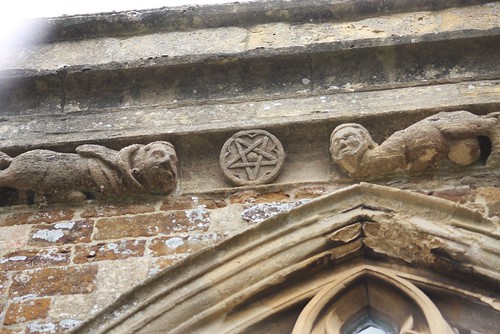
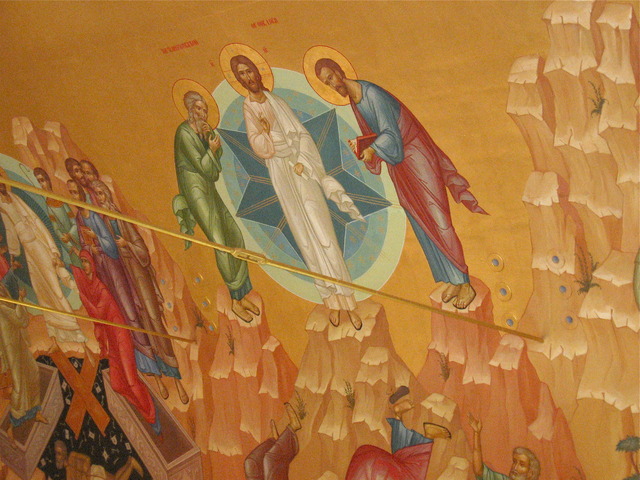
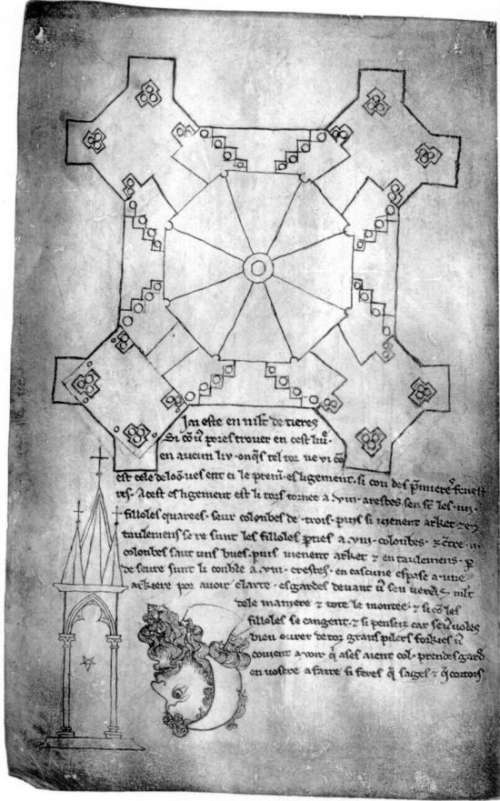
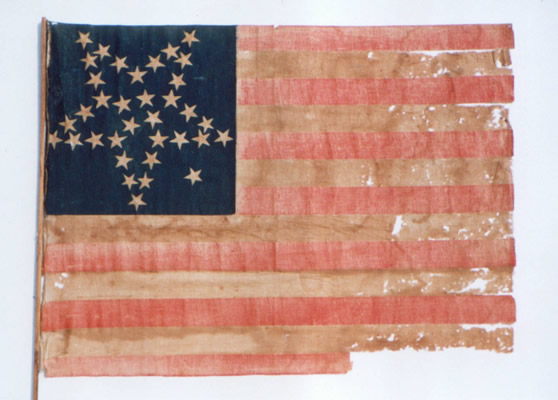
Examples of the inverted five-pointed star in ancient Christian usage and also numerous modern usages that have nothing to do with the occult or satanism

Below are links to examples of the inverted five-pointed star in ancient Christian usage and also numerous modern usages that have nothing to do with the occult or satanism.

Christian Churches
  • Kaarma, Estonia, Church of Sts. Peter and Paul - 1261 AD off-site
  • Amiens, France, cathedral, north transept window off-site
  • Market Church, Hanover, Germany off-site
  • Church pew, Europe, 12th century off-site
  • Chartres, France, niche surrounding Madonna and Child statue off-site
  • St. Mary's church, Adderbury, Oxfordshire off-site
  • St. Bartholomew church, Ucero, Spain off-site
  • Lisbon, Portugal cathedral cloister off-site
  • St. Paul's cathedral, Melbourne, Australia off-site
  • Orthodox Church, Olyphant, Pennsylvania - 2009 AD off-site
  • Schenkenschanz, Germany - 1634 AD [video] off-site
Christian Artwork
Jewish Synagogue
Medal of Honor
Boy Scouts of America
Coat of Arms
Flags
Miscellaneous

Question: Why is the Masonic symbol of the "All Seeing Eye" present on the Salt Lake Temple?

The All-Seeing Eye of God was not a symbol created by the Masonic fraternity and, in fact, was utilized as an emblem in Christian architecture long before Speculative Freemasonry became an organization

The claim is sometimes made by critics that since the All-Seeing Eye of God is displayed on the exterior and interior of the Salt Lake Temple[14] and the All-Seeing Eye is an emblem utilized by the Freemasons then the Mormon usage must be an indication of a connection between Mormon temples and Freemasonry.

The All-Seeing Eye of God was not a symbol created by the Masonic fraternity and, in fact, was utilized as an emblem in Christian architecture long before Speculative Freemasonry became an organization.

Latter-Day Saints as a group became involved in Freemasonry in early 1842 but, as noted in the timeline below, the All-Seeing Eye of God was a well-established symbol among the Mormons long before this affiliation.

1828–29 – “I pray the God of my salvation that He view me with His all-searching eye” (2 Ne. 9:44).

1828–29 – “under the glance of the piercing eye of the Almighty God” (Jacob 2:10).

1828–29 – “the glance of [God’s] all-searching eye” (Mosiah 27:31).

December 1830 – “I can stretch forth mine hands and hold all the creations which I have made; and mine eye can pierce them also” (Moses 7:36).

2 January 1831 – “Thus saith the Lord your God, even Jesus Christ, the Great I AM, Alpha and Omega, the beginning and the end, the same which looked upon the wide expanse of eternity, and all the seraphic hosts of heaven, before the world was made; The same which knoweth all things, for all things are present before mine eyes. . . . mine eyes are upon you. I am in your midst and ye cannot see me” (D&C 38:1–2, 7).

13 August 1831 – “mine eyes are upon those who have not as yet gone up unto the land of Zion” (D&C 62:2).

1 November 1831 – “Hearken, O ye people of my church, saith the voice of Him who dwells on high, and whose eyes are upon all men” (D&C 1:1).

November 1831 – “Behold and lo, mine eyes are upon you” (D&C 67:2).

31 July 1832 – “my heart is naked before [God’s] eyes continually.”[15]

4 January 1833 – “the eyes of my Maker are upon me.”[16]

May 1835 – “the scrutinizing eye of ‘Him with whom we have to do.’”[17]

29 January 1836 – “[the] Lord had [His] eye upon thee.” [18]

9 May 1836 – “they stand naked and exposed to the piercing eye of Jehovah.” [19]

May 1836 – “God is not mocked with impunity. His all seeing eye beholds you at all times. . . . His all-seeing eye surveys the whole of His vast creation.” [20]

April 1837 – “the scrutinizing eye of Jehovah is ever upon them.” [21]

June 1837 – “In vain do they attempt to hide from the scrutinizing eye of Jehovah.” [22]

20 March 1839 – “Behold, mine eye seeth and knoweth all their works.” [23]

3 July 1839 – “the God of Jacob has His eye upon you.” [24]

September 1840 – “the all-searching eye of an Omnipresent God.” [25]

January1841 – “God that sheweth mercy; having His eye at the same time directed towards His covenant people.” [26]

13 December 1841 – “Let it not be supposed that the sick and the destitute are to be denied the blessings of the Lord’s house; God forbid; His eye is ever upon them for good.” [27]

Notes (click to expand)
  1. "Vigilant, Saints Alive in Jesus website, "Sinister Sites – Temple Square, Utah," (6 April 2010).
  2. Joseph Smith, History of The Church of Jesus Christ of Latter-day Saints, ed. Brigham H. Robers, 7 vols. (Deseret Book, 1957), 6:196–197. Volume 6 link
  3. Josiah Quincy, Figures of the Past: From the Leaves of Old Journals (Boston: Roberts Brothers, 1883), 389.
  4. Wandle Mace, autobiography, 207, L. Tom Perry Special Collections Library, Brigham Young University, Provo, Utah.
  5. Ivan J. Barrett, "Church of the Firstborn," in Encyclopedia of Mormonism, 4 vols., edited by Daniel H. Ludlow, (Macmillan Publishing, 1992), 1:276.
  6. Joseph Smith, History of The Church of Jesus Christ of Latter-day Saints, ed. Brigham H. Robers, 7 vols. (Deseret Book, 1957), 5:1–2. Volume 5 link
  7. Deseret Evening News (20 August 1880): 3.
  8. Joseph Smith, History of The Church of Jesus Christ of Latter-day Saints, ed. Brigham H. Robers, 7 vols. (Deseret Book, 1957), 6:196-97. Volume 6 link
  9. Josiah Quincy, Figures of the Past From the Leaves of Old Journals (Boston: Roberts Brothers, 1883), 389.
  10. Wandle Mace, Autobiography, 207, Special Collections, Harold B. Lee Library, Brigham Young University, Provo, Utah.
  11. Deseret Evening News, vol. 13, no. 228 (20 August 1880): 3.
  12. "The Public Forum," Salt Lake Tribune (13 November 1985): A–15.
  13. The Mathematical Gazette, vol. 78, no. 483 (November 1994): 319.
  14. The All-Seeing Eye of God can be seen on east and west center towers of the Salt Lake City temple and also in the interior in the Garden Room (see Ensign, October 1990, 39; March 1993, 33).
  15. Letter by Joseph Smith Jr. in Dean C. Jessee, ed., Personal Writings of Joseph Smith, rev. ed. (Salt Lake City and Provo, UT: Deseret Book and BYU Press, 2002), 269; hereafter cited asPWJS.
  16. Letter by Joseph Smith Jr. in ibid., 298.
  17. Statement by Oliver Cowdery in Messenger and Advocate, vol. 1, no. 8, May 1835, 121; hereafter cited as M&A.
  18. Joseph Smith Sr. statement in Dean C. Jessee, Mark Ashurst-McGee, and Richard L. Jensen, eds., The Joseph Smith Papers: Journals Volume 1, 1832–1839 (Salt Lake City: The Church Historian’s Press, 2008), 176.
  19. Letter by Parley P. Pratt dated 9 May 1836 in M&A, vol. 2, no. 8, May 1836, 318.
  20. [citation needed]
  21. Statement by William Marks in ibid., vol. 3, no. 7, April 1837, 493.
  22. Comment by William Marks in ibid., vol. 3, no. 9, June 1837, 525.
  23. Letter by Joseph Smith Jr. in PWJS, 435.
  24. Epistle of the Quorum of the Twelve Apostles signed by Brigham Young, Heber C. Kimball, John E. Page, Wilford Woodruff, John Taylor, and George A. Smith in Brigham H. Roberts, ed., History of the Church (Salt Lake City: Deseret News Press, 1930), 3:394; hereafter cited as HC.
  25. Orson Pratt, An Interesting Account of Several Remarkable Visions (Edinburgh: Ballantyne and Hughes, 1840), 27.
  26. Article by Brigham Young and Willard Richards in Millennial Star, vol. 1, no. 9, January 1841, 223.
  27. Epistle of the Quorum of the Twelve Apostles signed by Brigham Young, Heber C. Kimball, Orson Pratt, William Smith, Lyman Wight, Wilford Woodruff, John Taylor, George A. Smith, and Willard Richards in Times and Seasons, vol. 3, no. 4, 15 December 1841, 626. Notice that the all-seeing eye is being indirectly connected with the temple.

< Back to FAIR Answers Index

Money Spent on Temples

Summary: Critics argue that the Church of Jesus Christ of Latter-day Saints spends excessive amounts of money on temples when those resources could instead be used to feed the hungry, alleviate poverty, or meet other humanitarian needs. In the eyes of critics, lavish temple construction is difficult to justify in a world with so much suffering.

The Church builds temples because they are divinely commanded, central to its religious mission, and necessary for sacred ordinances believed to have eternal significance, while humanitarian and welfare efforts remain important but do not replace the distinct purpose of temples.


Presiding Bishop Gerald Causse explained the Church's purpose and its focus on how it uses its financial resources:

We are not a financial institution or a commercial corporation. We are the Church of Jesus Christ, and this Church has no other objective than that which the Lord Himself assigned to it—namely, to invite all to “come unto Christ, and be perfected in him,” by “helping members live the gospel of Jesus Christ, gathering Israel through missionary work, caring for the poor and needy, and enabling the salvation of the dead by building temples and performing vicarious ordinances.”[1]

In addition, President Russell M. Nelson taught:

The good this Church accomplishes around the world to alleviate human suffering and provide uplift for humankind is widely known. But its prime purpose is to help men, women, and children follow the Lord Jesus Christ, keep His commandments, and qualify for the greatest of all blessings—that of eternal life with God and their loved ones.[2]

Latter-day Saints believe that these blessings are possible through certain ordinances (rituals) and covenants (promises). These ordinances and covenants are only available in specially designated places, called temples, as explained by the Prophet Joseph Smith:

The main object was to build unto the Lord a house whereby He could reveal unto His people the ordinances of His house and the glories of His kingdom, and teach the people the way of salvation; for there are certain ordinances and principles that, when they are taught and practiced, must be done in a place or house built for that purpose.[3]

Three Possible Reasons

It is important to remember these doctrines when considering why the Church spends so much money on temples. There are three possible reasons.

First: The Lord commanded it. In a revelation to Joseph Smith, the Lord commanded:

Come ye, with all your gold, and your silver, and your precious stones, and with all your antiquities; and with all who have knowledge of antiquities, that will come, may come, and bring the box tree, and the fir tree, and the pine tree, together with all the precious trees of the earth; and with iron, with copper, and with brass, and with zinc, and with all your precious things of the earth; and build a house to my name, for the Most High to dwell therein. . . . And verily I say unto you, let this house be built unto my name, that I may reveal mine ordinances therein unto my people.[4]

Second: To honor God. In the revelation cited above, the Lord called for a house to be built "for the Most High to dwell therein." A member of the Seventy explained: "By requiring exacting standards of construction down to the smallest of details, we not only show our love and respect for the Lord Jesus Christ, but we also hold out to all observers that we honor and worship Him whose house it is."[5]

Third: To show how much God honors us. In the revelation cited above, the Lord explained that in His house He would "reveal mine ordinances." These ordinances (and their associated covenants) are gifts from God to His children that provide them with greater knowledge, power, direction, and peace.[6] Consider how you would feel if God wanted to give you these blessings in a dingy, dirty, broken-down building. You would likely feel that God doesn't respect you and that His blessings aren't really worth very much. By building temples with the "precious things of the earth," we show how much God values us and the incredible blessings He is providing to us.

Source(s) of the criticism
Critical sources


Notes (click to expand)
  1. Gerald Causse, "The Spiritual Foundations of Church Financial Self-Reliance," 'Ensign, July 2018.
  2. Russell M. Nelson, “Opening the Heavens for Help,” April 2020 general conference.
  3. "Chapter 36: Receiving the Ordinances and Blessings of the Temple," in Teachings of Presidents of the Church: Joseph Smith (2011).
  4. Doctrine and Covenants 124:26–27, 41.
  5. Scott D. Whiting, “Temple Standard,” October 2012 general conference.
  6. See General Handbook, "27.2 The Endowment."

< Back to FAIR Answers Index

Spiritual Manifestations at the Dedication of the Kirtland Temple

Summary: Critics argue that the spiritual manifestations reported at the dedication of the Kirtland Temple were not genuine religious experiences but were actually the result of widespread intoxication—sometimes described as a "drunken orgy" or mass drunkenness induced by wine. According to these critics, the visions, prophecies, speaking in tongues, and other reported manifestations can be explained by alcohol rather than divine intervention. The claim fails because contemporary accounts overwhelmingly describe spiritual manifestations, while allegations of drunkenness appear only in later hostile sources and, at most, indicate that a few individuals became unintentionally intoxicated after fasting and drinking wine on an empty stomach—not that the reported experiences generally resulted from drunkenness. Even the principal dissenting source, John Corrill, did not claim the temple manifestations were caused by alcohol. The later accounts of William E. McLellin describe an isolated incident involving a few participants rather than the dedication as a whole. Numerous contemporaneous testimonies exist reporting visions and spiritual experiences without mentioning widespread drunkenness.


Question: Was the "Pentecost" at the Kirtland Temple dedication actually a drunken orgy?

There is no contemporaneous evidence of drunkenness at the Kirtland temple dedication or associated events

Were there really spiritual manifestations attending the dedication of the Kirtland temple? There have been allegations that it was in fact a drunken orgy. [1]

There is no contemporaneous evidence of drunkenness at the Kirtland temple dedication or associated events. There is extensive evidence from both leaders and lay members of a miraculous spiritual outpouring. An early apostate, John Corrill, minimized or dismissed accounts of drunkenness. Another apostate, Winchester, continued with the Church until Nauvoo, and only later reported the drunkenness about which he mentioned nothing for five years. McLellin is the richest source for the charges of drunkenness, but an examination of his account makes it clear that he speaks of only one meeting in the temple, and the problem was at worst confined to a few members who unintentionally fell under the influence of wine on an empty stomach.

Subsequent critical authors have often relied on Wyl or accepted such remarks uncritically, and have ignored a rich vein of contemporary source material attesting to the Pentecost of Kirtland. While the critics are anxious to dismiss reports of spiritual manifestations by any means necessary, theories of mass drunkenness are simply not up to the task.

At the first Pentecost, the Apostles were also accused of being drunken

It is ironic that critics refer to the Kirtland Temple dedication as some form of "Pentecost" for the early Church, when, at the first pentecost, the Apostles were also accused of being drunken. "Others mocking said, These men are full of new wine." (See Acts 2:13-15)

4 And they were all filled with the Holy Ghost, and began to speak with other tongues, as the Spirit gave them utterance.

5 And there were dwelling at Jerusalem Jews, devout men, out of every nation under heaven.

6 Now when this was noised abroad, the multitude came together, and were confounded, because that every man heard them speak in his own language.

7 And they were all amazed and marvelled, saying one to another, Behold, are not all these which speak Galilaeans?

8 And how hear we every man in our own tongue, wherein we were born?

9 Parthians, and Medes, and Elamites, and the dwellers in Mesopotamia, and in Judaea, and Cappadocia, in Pontus, and Asia,

10 Phrygia, and Pamphylia, in Egypt, and in the parts of Libya about Cyrene, and strangers of Rome, Jews and proselytes,

11 Cretes and Arabians, we do hear them speak in our tongues the wonderful works of God.

12 And they were all amazed, and were in doubt, saying one to another, What meaneth this?

13 Others mocking said, These men are full of new wine. Acts 2:4-13 (emphasis added)

In November 2002, an early account of the dedication of the Kirtland temple surfaced, confirming the spiritual outpouring. This account provides an excellent contemporary window into the event:

Sunday evening after joseph spoke opened & told them the day of penticost was continued the the [sic] Brethren began to to prophesy many prophesied in the name of the Lord then began speaking in tongues and it filled as it were the whole house, perhaps there were forty speaking at once cloven tongues of fire was seen to sit on many of them an hand was seen laid upon one when he spake in tongues to the lamanites many Visions seen, one saw a pillow or cloud rest down upon the house bright as when the sun shines on a cloud like as gold, two others saw three personages hovering in the room with bright keys in their hands, and also a bright chain in their hands....[2]

There is no contemporaneous record of drunken behavior associated with the Temple dedication

Significantly, there is no contemporaneous record of drunken behavior associated with the dedication. A great deal was written about miraculous events, but the stories of drunkenness occur only later. One Latter-day Saint historian noted:

...Latter-day Saints, like so many other Christians of the 1830s, regarded intemperance as a serious transgression, and there is no evidence that any of the visions described by numerous witnesses followed the consumption of large amounts of wine. Contemporary testimonies of these events are so numerous that they cannot be dismissed with such an oversimplification.[3]

Question: How did the story of "drunken behavior" at the Kirtland Temple dedication originate?

The first mention of "drunken behavior" came from John Corrill, a Latter-day Saint dissenter

John Corrill, a Latter-day Saint dissenter, wrote a book in 1839 that described the Church's history and gave his reasons for leaving. Of the Kirtland dedication, Corrill wrote:

At length the time arrive for this [solemn] assembly to meet, previous to which, Smith exhorted the elders to solemnize their minds by casting away every evil from them in thought, word, or deed, and let their hearts become sanctified, because they need not expect a blessing from God without being duly prepared for it; for the Holy Ghost would not dwell ini unholy temples....

The sacrament was then administered, in which they partook of the bread and wine freely, and a report went abroad that some of them got drunk; as to that every man must answer for himself. A similar report, the reader will recollect, went out concerning the disciples, at Jerusalem, on the day of penticost. This was followed by a marvellous spirit of prophecy. Every man's mouth was full of prophecying, and for a number of days or weeks their time was spent in visitng from house to house, making feasts, prophecying, and pronouncing blessings on each other, to that degree, that from the external appearance, one would have supposed that the last days had truly come, in which the spirit of the Lord was poured out upon all flesh....[4]

When this account was written, Corrill had already decided that Joseph Smith was a false prophet

This account is significant because of what Corrill does not say. At this writing, Corrill was disenchanted with the Church, and had decided that Joseph Smith was a false prophet. Corrill acknowledges that some charged that the Saints were merely under the influence of wine; he notes that each person would have to respond for themselves, but does not seem to give this story much credence. Corrill even goes so far as to point out that the pentecost at Jerusalem had similar charges made—a strange claim to make if he wishes to claim that Church members were drunk. Corrill goes on to say that to all outward appearances, "the last days had truly come"—i.e., there was nothing about the conduct of the members in those days to suggest that they were not having revelations, prophecies, etc.

=Corrill would have had motive for disparaging the Saints' claims to revelations

Indeed, he insisted that he did not believe the Church's revelations, but this was because of the difficulties which the Church encountered up to his departure. He no where blames wine for the Kirtland events.[5]

Question: How did stories of "drunken behavior" at the Kirtland Temple dedication propagate?

Wilhelm Wyl, in his anti-Mormon book Mormon Portraits, quotes William McLellin

In 1886, Wilhelm Ritter von Wymetal, writing under the pen name Wilhelm Wyl, published a book of lurid anti-Mormon tales called Mormon Portraits.

Wyl quoted former apostle William McLellin on the topic of the Kirtland dedication:

The "Endowments" in the Kirtland temple were nothing but a big spree, so big, that the "apparitions of angels," etc., were not miraculous at all. I quote from a letter by Dr. McLellin, one of the first quorum of Mormon apostles:

"About five hundred ministers entered that great temple about sunrise and remained fasting until next morning sunrise, except a little bread and wine in the evening. The Twelve were required to take large servers and set glasses of wine and lumps of bread, and go through the house and serve the brethren. I did my part of the serving. During the night a purse was made up and a wagon sent to Painesville and a barrel of wine procured, and then it was a time. All the latter part of the night I took care of Samuel H. Smith [brother of the prophet] , perfectly unable to help himself. And I [309] had others removed from the house because they were unfit- to be in decent company" (italics in original)."[6]

One must then ask—was McLellin in a position to know about such things at the Kirtland temple dedication, and what did he say or do about it prior to Wyl's citation in 1886?

Question: Was William McClellin disappointed in the endowment at the Kirtland Temple?

William McLellin was disappointed in the endowment, because McLellin did not receive what he sought

McLellin was among the first apostles called in this dispensation, on 14 February 1835.[7] McLellin was present for the dedication, but was disappointed with it. He wrote, "We passed through it [the Kirtland endowment]; but I, in all candor say, we were most egregiosly mistaken or disappointed!"[8] McLellin went on to describe the reason for his disappointment:

In a few days I said to Joseph: "I am disappointed! I supposed—yet, I believed that during the endowment, I should get knowledge but I have not."

He said to me, "What do you want?"

I said, "I want to know for myself (italics in original)."[9]

There is no mention here of those who claim to receive knowledge being drunk—we learn only that McLellin did not receive what he sought. This was a recurring theme of McLellin's—he often mentioned the endowment and the fact that it was a disappointment, or did not achieve what was anticipated. For example:

Feb 1847
McLellin forms "Church of Christ" with Martin Harris and others. The new Church faults Joseph Smith for "Engineering the 'endowment' at the Kirtland Temple in March and April 1836, which failed to meet expectation because the Lord would not endow His spirit in those who had drifted so far from divine purpose."[10]
1870
"disappointed" because he did not know for himself.[11]
December 1878
"I told him [Joseph] I wanted knowledge and power from God; that as an Apostle I might go forth to the nationis of the earth, and preach to them in their own lip the pure gospel of the Lord."[12]
1880
"I don't believe, in the attempted endowment in the Temple in Kirtland in 1836. It was an entire failure."[13]
1880
"I do not believe in the authority that dedicated Zion or the Temple in Kirtland. There was no power from God shown forth in those pretended dedications; as was seen and known when Solomon's Temple was dedicated in Jerusalem. If ceremony and nothing but form was seen in Joseph's dedications then we are prepared to say they were not of God; but only manism and nothing more.[14]

Question: Did William McLellin ever mention drinking in association with the Kirtland Temple?

There are several instances in which McLellin mentioned drinking in association with the temple

April 1854
"Orson, you cannot have forgotten the scenes of drunkenness during the pretended enduement [sic] in Kirtland in 1836. I shall never forget them, nor the hundreds of false prophecies delivered in the Temple on that occasion.[15]
October 1871
"As to the endowment in Kirtland, I state positively, it was no endowment from God. Not only myself was not endowed but no other man of the five hundred who was present—except it was with wine![16]
July 1872
"In 1836 when they undertook to get an endowment in the Kirtland Temple. All washed and with oil anointed themselves, and appeared in the Temple at sunrise...and about five hundred ministers took their places, and solem[n]ly prayed. We remained there fasting until sunrise next morning. We however partook of some bread and wine in the evening. And some partook so freely, on their empty stomachs, that they became drunk! I took care of S[amuel] H. Smith in one of the stands so deeply intoxicated that he could not nor did sense anything. I kept him hid from the crowd in the stand, but he vomited the spit-box five times full, and his dear brother [Don] Carlos would empty it out of the window.[17]
August 1872
"In 1836 when they undertook to get an endowment in the Temple. All washed, and with oil anointed themselves, and appeared in the Temple at sun rise, then all their feet were washed, and about five hundred ministers dedicated themselves by solemn prayr [sic]. We remained there fasting until sun rise next morning. We however partook of some bread and wine in the evening. And some partook so freely, on their empty stomachs, that they became drunk! I took care of S[amuel] H. Smith, in one of the stands, so deeply intoxicated that he could not nor did not sense any thing. I kept him hid from the company but he vomited the spit-box full five times, and his dear brother [Don] Carlos would empty it out at the window. But I would prefer to draw a curtain over the awful drunken scene! Others imbibed to[o] much also. But let the curtain fall!!...But no power in Jos. Smith's dedication...If it was not transgression, what was the cause of so much disappointment?[18]
December 1878
"On the 6th of April, 1836, the ministerial authorities, about five hundred in number, entered that house at sunrise, and remained fasting until next morning, sun-rise, in order to receive an endowment, but utterly failed in their endeavor! It was more an endowment with wine than power from God.[19]
January 1879
Quotation as cited by Wyl above.[20]
Circa 1880
"The endowment was sought for in Kirtland, O. on April 6th 1836, but was not received, and was an entire failure....[the members] assembled at sunrise, and remained fasting until the next morning sunrise. Then about five hundred ministers began to wend their way home from than noble building, many of them disappointed and dispirited. The scene through which they had passed was one long to be remembered. No display of power from God was given. Al the power given was the power of man....They had a little bread, sent in by the sisters in the evening, The Twelve as servants carried round to them on servers a little bread and wine, and some of them partook of the wine so freely so as to become badly intoxicated!{[21]
Circa 1880
"The morning arrived and some five hundred ministers assembled in the Temple at sunrise....We remained until sunrise next morning fasting, excepting a little bread and wine furnished us in the evening. Some partook of the wine so freely on an empty stomach, that they actually became drunken! And a scene ensued that would be hard to describe. One thing I state candidly, I saw no one man in that assembly that was endowed with super-human power–no not one. This wonderful enduement [sic] then was only a farce—a very great failure.[22]

On April 6th, McLellin notes that the men involved had been fasting all day, and so the wine brought them to break their fast had a more dramatic effect than intended

Thus, McLellin describes an event on the 6 April. We learn the following things:

  • the men involved had been fasting all day, and so the wine brought them to break their fast had a more dramatic effect than intended. Even in McLellin's account, the drunkenness is not intentional.
  • "a little bread and wine" is provided—this is clearly not intended to be a time of excess, gorging, or over-indulgence.
  • "some" partook too "freely on an empty stomach."
  • the food and drink was provided by the women of the Church—unlikely candidates for trying to get the religious community drunk. In one account (the one cited by Wyl) McLellin says only bread was sent up, and then a "purse" collected to send for wine from a neighboring town. This is a strange deviation from the story told everywhere else—it seems calculated to make it seem as if the wine was sent for with the intent of getting drunk. It seems more likely that wine was procured for breaking the fast, and that McLellin told the story in this way to produce the worst impression possible. It is small wonder that Wyl chose to cite this version, likely for the same reasons.
  • The Twelve—including McLellin himself—helped distribute the food and wine—so, if the intention was to get everyone drunk to induce visions, McLellin participated. Yet, he was clearly horrified by those who were affected.
  • McLellin names only one person specifically as being drunk: Samuel Smith. This presumably means that other more prominent members (e.g., Joseph Smith, Oliver Cowdery) who reported visions that day were not inebriated, or McLellin would have named them, the better to shock his audience and prove the falsity of the Church's claims.
  • Samuel Smith is said to have been so affected that "he could not nor did sense anything." If this is so, then Samuel cannot have simultaneously been under the delusion that he was seeing celestial visions. While his state might be regrettable, it cannot explain the visions which others reported.
  • McLellin says that he tried to "hide" Samuel from the crowd—this suggests that the majority of those there were perfectly capable of noticing that Samuel was drunk. It also suggests that Samuel was an exception, rather than the rule—if all (or most) of the crowd is drunk, why would anyone notice Samuel's illness, and why would any of them care?
  • McLellin's August 1872 account says that Samuel was drunk, and then notes almost as an afterthought that "Others imbibed to[o] much too." Samuel seems the most dramatic case, and something of an exception—one wonders if the necessity of preventing Samuel's condition from making a scene and disturbing the worship service soured the experience for McLellin, leading him later to ascribe an air of drunkenness to the whole group, which is clearly unwarranted.
  • McLellin's Jan 1879 account says that he had others removed from the temple because of the problem—but, this would again seem to imply that the majority were not misbehaving, were not drunk, and were not rowdy or out of control.

In short, at most McLellin tells us that a few members were unintentionally made drunk after fasting and taking wine on an empty stomach

McLellin's account dovetails well with John Corrill's—Corrill had responded to the charge of drunkenness by saying that every man needed to answer for himself, but downplayed the idea that the Saints' behavior at Kirtland could in general be explained by drunkenness. Thus, some may have been influenced by the wine, but they would have been the exception, rather than the rule.

And, McLellin's tellings often omitted the wine altogether, and focused on the "failure" of the endowment, demonstrating that the wine was probably not his biggest concern, or the scandal which he sometimes made it out to be. McLellin goes on to insist that no one reported or experienced anything—but the record clearly contradicts him. McLellin makes his own failure to experience anything into a universal experience, when it clearly was not.

We note too that April 6th was well after the dedication of the temple; a great many visions and experiences had been reported, which predate McLellin's account of the wine. McLellin was present at these events, and says nothing of them—the April 6 meeting seems to be the only anomaly, and then only for a relatively few participants.

Of McLellin's remarks, historian D. Michael Quinn noted that:

he [McLellin] was among those responsible for having served too much wine to the fasting men, something which undoubtedly embarrassed him in retrospect....
McLellin admonished Mormon antagonist James T. Cobb as follows: 'I know a man can sit down and find crookedness in almost any thing by prying closely into it.' It was wise advise and unusually temperate. That said, [McLellin's] treatment of the drunkenness in the temple would fall into the same category of hyper-criticism.
Of course, he wanted to emphasize the more substantive issue of truthfulness or falsehood in later claims about heavenly manifestations in the temple. On this score, it is interesting that he conflated several solemn assemblies and successive days of temple dedication into one incident, leaving the reader to wonder whether he was implying that the drunkenness was representative or anomalous....[23]

Quinn discusses the many contemporaneous reports of visions and miracles from leaders and lay members of the Church, and then writes:

One may legitimately disobelieve these testimonials or dismiss them as delusional, but McLellin denied that such claims even existed....Since even the rank-and-file made contemporary notations about spiritual events in the temple at this time, it is difficult to believe that Apostle McLellin was unaware of these reports from January through the spring of 1836 [we again recall that McLellin only speaks of April 6 — ed.]. It would have been more accurate (and charitable) for McLellin to say that he saw no otherworldly manifestations himself, even though others made such claims.[24]

Other accounts

Benjamin Winchester

Another account comes from Benjamin Winchester, who was a friend of Joseph Smith’s, an LDS leader in the early 1840s. In 1889, he wrote that the Kirtland temple dedication “ended in a drunken frolic.”[25] Winchester left the Church during the Nauvoo era in the 1840s, but the temple dedication occurred in March of 1836. Winchester had thus remained a member even after the supposed events in Kirtland that he later condemned. Why? Why didn’t he leave earlier if he knew that such things were serving as the surrogate for spirituality five years earlier?

John L. Traughber

Traughber, a member of the RLDS Church, carried on a correspondence with McLellin, and would later acquire the McLellin collection with the intention of writing a book about Mormonism. Despite creating a manuscript of over three hundred pages, he never successfully completed his book.[26]

In May 1884, Traughber cited some of McLellin's material, and then claimed that in April 1881 he visited McLellin:

I talked with Dr. McLellan and his wife about the endowment at the Kirtland temple, 1836. They stated that before Samuel H. Smith became dead drunk, he staggered up on the stand of the First Presidency and delivered a prophecy. Mrs. McLellan remarked that the Latter Day Saints seemed to think that it was all right for Samuel to be drunk, and spoke of it as almost a miracle that he could deliver a prophecy when he was so drunk he could hardly stand.[27]

This version seems an exaggeration or fabrication. McLellin's numerous accounts never mention Samuel giving a prophecy or speech. Furthermore, McLellin twice indicated that he tried to keep Samuel's condition a secret from the rest of the congregation—hardly necessary or possible if Samuel had been seen to be "so drunk he could hardly stand," and if the Saints had regarded this as "all right" and "a miracle." If this was so, why was McLellin trying to keep Samuel's state a secret? Why did McLellin expel others who had taken too much wine on an empty stomach? Why did he never tell this even more damning version of events in his multiple accounts?

The story is dubious, and the fault of fabrication likely lies with either Mrs. McLellin, or with Traughber himself.

The story spreads

In 1890, the Reverend Theodore Schroeder went to Salt Lake City, and stayed for ten years digging through libraries and collections for ammunition with which to attack the Church. He returned to Wisconsin in 1900 and donated all his books and papers to the Wisconsin State Historical Society Library, in Madison, Wisconsin. He also wrote several anti-Mormon articles for publication, and used Wyl's material frequently. In 1901, Traughber offered to sell the McLellin collection to Schroeder, but the latter declined.

Notes (click to expand)
  1. This criticism is advanced by Fawn M. Brodie, No Man Knows My History: The Life of Joseph Smith (New York: Alfred A. Knopf, 1945), 179. ( Index of claims ); William E. McLellin, multiple accounts; Benjamin Winchester, "Primitive Mormonism," Salt Lake Tribune (22 September 1889): 2; Wilhelm Wyl, Mormon Portraits Volume First: Joseph Smith the Prophet, His Family and Friends (Salt Lake City: Tribune Printing and Publishing Co., 1886), 308–309. (citing McLellin); Theodore Schroeder, "Mormonism and Intoxicants," American Historical Journal 3 (1908): 238-249 (citing Wyl).
  2. Steven C. Harper, "Pentecost Continued: A Contemporaneous Account of the Kirtland Temple Dedication," BYU Studies 42 no. 2 (2003), 4–.
  3. Milton V. Backman, Jr., The Heavens Resound: A History of the Latter-day Saints in Ohio, 1830–1838 (Salt Lake City, Utah: Deseret Book Co., 1983), 309. ISBN 0877479739 GospeLink
  4. John Corrill, A Brief History of the Church of Jesus Christ of Latter-day Saints, (Commonly Called Mormons;) Including an account of their doctrines and discipline; with the reasons of the author for leaving the church (Published for the author, St. Louis, Mo., 1839), 23.
  5. Corrill, Brief History, 48, gives as his reasons for leaving that "I can see nothing that convinces me that God has been our leader; calculation after calculation has failed, and plan after plan has been overthrown, and our Prophet seemed not to know the event till too late....But where now may you look for deliverance? You may say, in God; but I say, in the exercise of common sense and that sound reason with which God has endowed you; and my advice is to follow that, in preference to those pretended visions and revelations which have served no better purpose than to increase your trouble...."
  6. Wilhelm Wyl, Mormon Portraits Volume First: Joseph Smith the Prophet, His Family and Friends (Salt Lake City: Tribune Printing and Publishing Co., 1886), 308–309.
  7. Larry C. Porter, "The Odyssey of William Earl McLellin: Man of Diversity, 1806–86," in The Journals of William E. McLellin, 1831–1836, edited by Jan Shipps and John W. Welch (Urbana: Brigham Young University Studies and University of Illinois Press, 1994), 314. ISBN 0842523162.
  8. William E. McLellin in Saints' Herald 17 (15 September 1870): 554; cited in Porter, "Man of Diversity," 320.
  9. McLellin, Saints Herald (15 September 1870): 554.
  10. Richard P. Howard, "Mormonism's Stormy Petrel," in Stan Larson and Samuel J. Passey (editors), The William E. McLellin Papers 1854–1880 (Salt Lake City, Utah: Signature Books, 2007), 19. ISBN 1560851449. Also available in Richard P. Howard, "William E. McLellin: 'Mormonism's Stormy Petrel'," in Differing Visions: Dissenters in Mormon History, edited by Roger D. Launius and Linda Thatcher, (Urbana and Chicago: University of Illinois Press, 1994), 76–97. ISBN 0252067312.
  11. McLellin, Saints Herald (15 September 1870): 554.
  12. McLellin to John L. Traughber, 14 December 1878, in Stan Larson and Samuel J. Passey (editors), The William E. McLellin Papers 1854–1880 (Salt Lake City, Utah: Signature Books, 2007), 512. ISBN 1560851449.
  13. McLellin, "Reasons Why I am Not A Mormon, ca. 1880 (italics in original); cited in Stan Larson and Samuel J. Passey (editors), The William E. McLellin Papers 1854–1880 (Salt Lake City, Utah: Signature Books, 2007), 383. ISBN 1560851449.
  14. McLellin, "Reasons Why I am Not A Mormon, ca. 1880 (italics in original); cited in McLellin Papers, 390.
  15. McLellin to Orson Pratt, 29 April 1854, p. 2; cited in McLellin Papers, 436.
  16. McLellin to Mark H. Forscutt, 1 October 1871; cited in McLellin Papers, 476.
  17. McLellin to Joseph Smith III, July 1872; cited in McLellin Papers, 493–494.
  18. McLellin to Dear Mary, 3- August 1872; cited in McLellin Papers, 498.
  19. McLellin to John L. Traughber, 14 December 1878, in McLellin Papers, 512.
  20. McLellin to John L. Traughber, 5 January 1879, in McLellin Papers, 517. See previous section for Wyl's citation.
  21. McLellin, "Reasons Why I am Not A Mormon, ca. 1880 (italics in original); cited in McLellin Papers, 396.
  22. McLellin, "Reasons Why I am Not A Mormon, ca. 1880; cited in McLellin Papers, 421-422.
  23. D. Michael Quinn, "'My Eyes Were Holden in Those Days': A Study of Selective Memory," in McLellin Papers, 73–74.
  24. D. Michael Quinn, "'My Eyes Were Holden in Those Days': A Study of Selective Memory," in McLellin Papers, 74–75.
  25. Benjamin Winchester, "Primitive Mormonism," Salt Lake Tribune (22 September 1889): 2.
  26. See "The John L. Traughber Papers," Marriot Library, Special Collections, University of Utah(Pages accessed 5 June 2009).
  27. Traughber cited in McLellin Papers, 518 note.